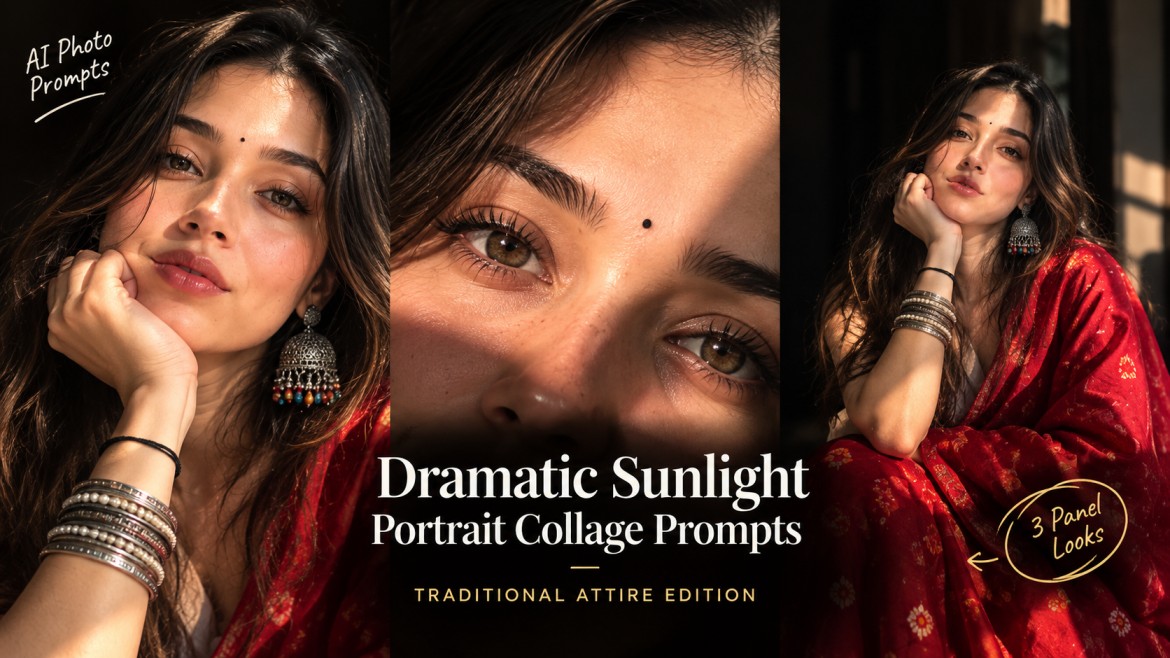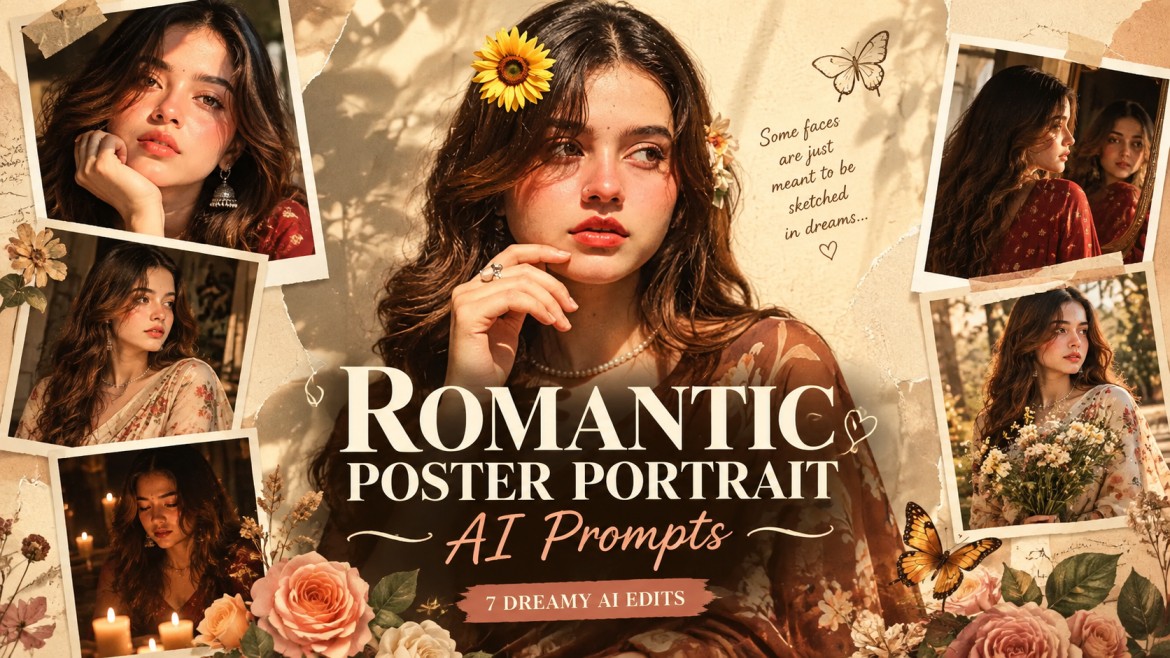
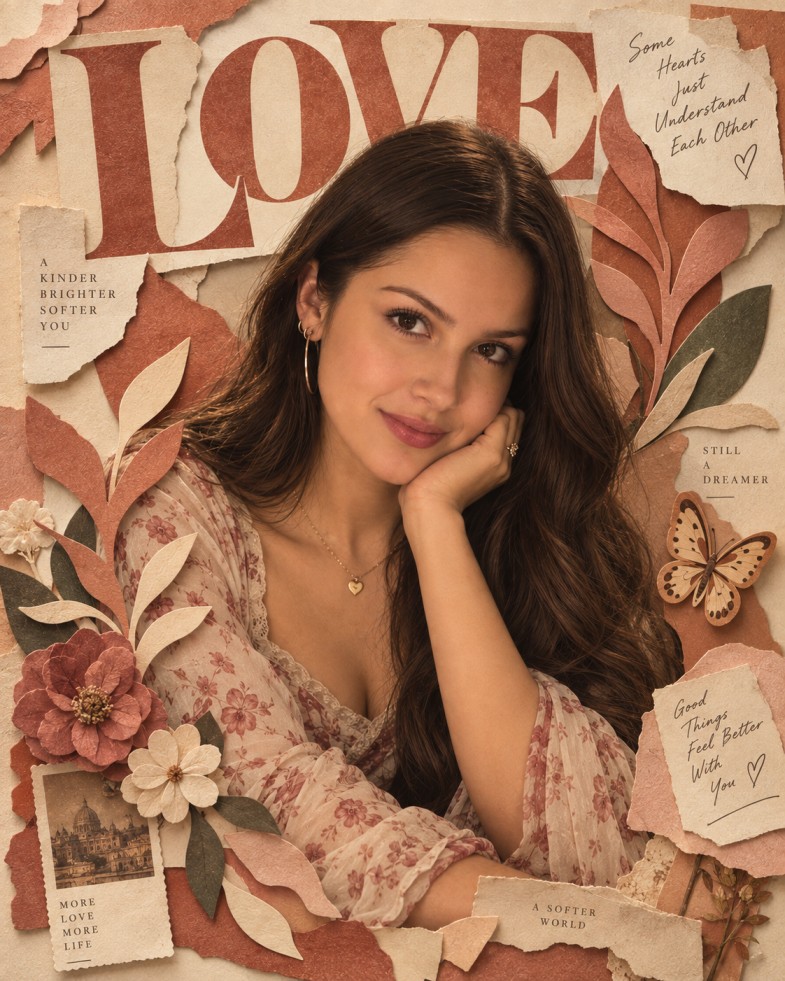
Romantic poster edits have a very different feel from ordinary AI portraits. Instead of simply changing the clothes or background, the image becomes a complete editorial composition with typography, flowers, butterflies, decorative graphics, and carefully controlled colors.
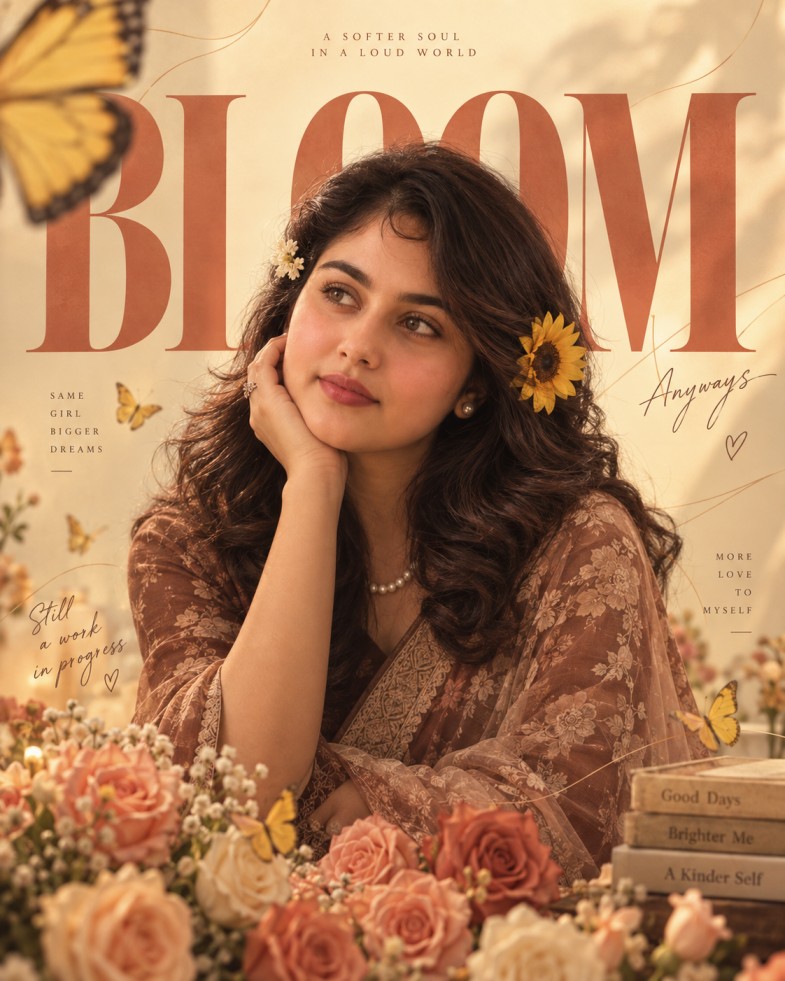
The reference style combines a warm pastel background, oversized typography, traditional clothing, floral elements, and a softly beautified portrait. The result feels somewhere between a fashion editorial, romantic magazine cover, and social-media poster.
The prompts below are designed around that visual language while giving you different variations to try.
Tip: Upload your own portrait and use it as the identity reference whenever the prompt says to do so.
1. Romantic Floral Poster Portrait
This is the closest concept to the original reference style: a centered portrait surrounded by roses, butterflies, flowers, and oversized typography.
AI Prompt
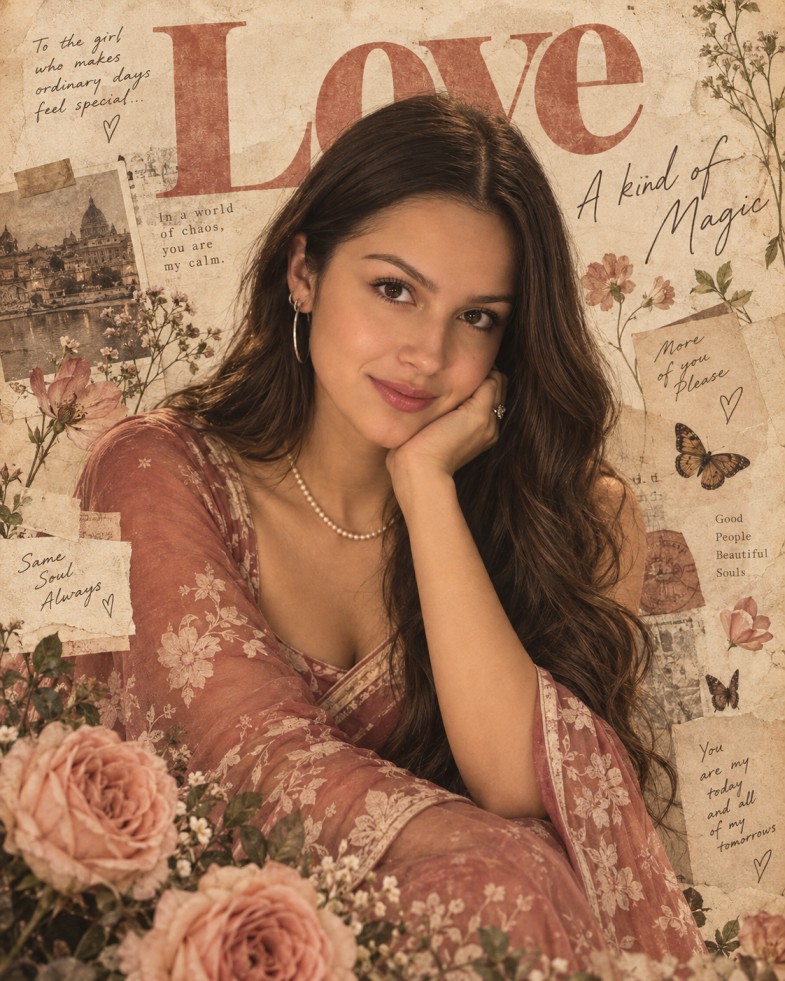
2. Vintage Love Letter Poster
This variation turns the portrait into an old-fashioned romantic stationery design.
AI Prompt
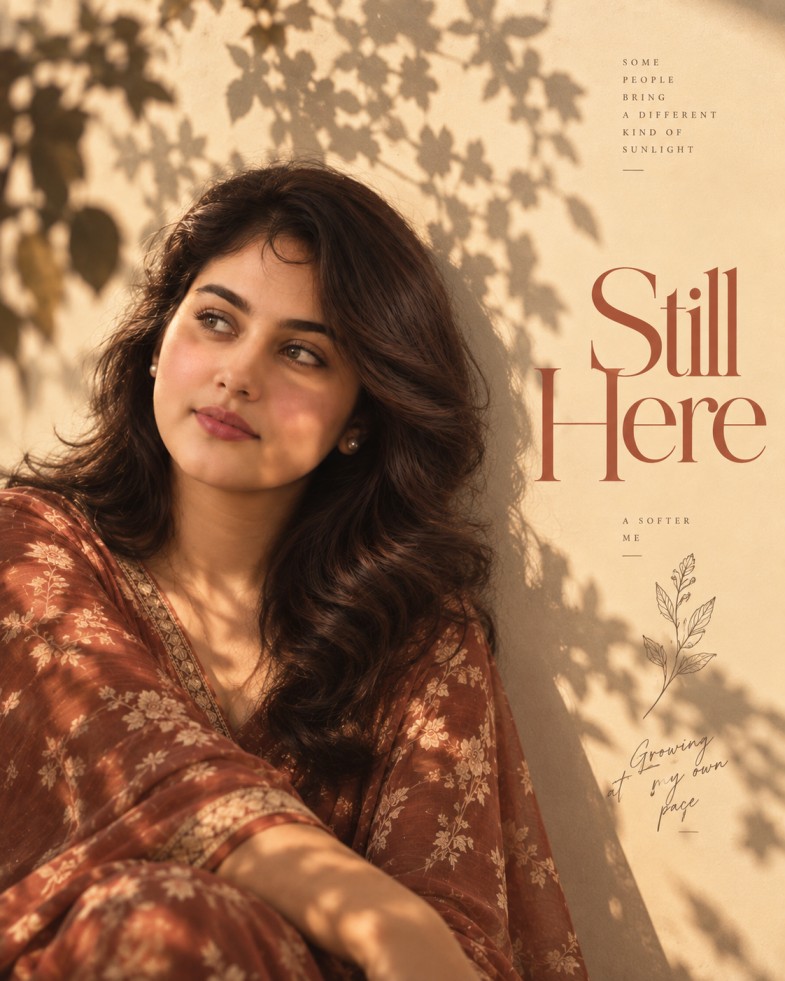
3. Botanical Shadow Poster
This is a much more editorial direction: flowers are created through shadows rather than pasted into the foreground.
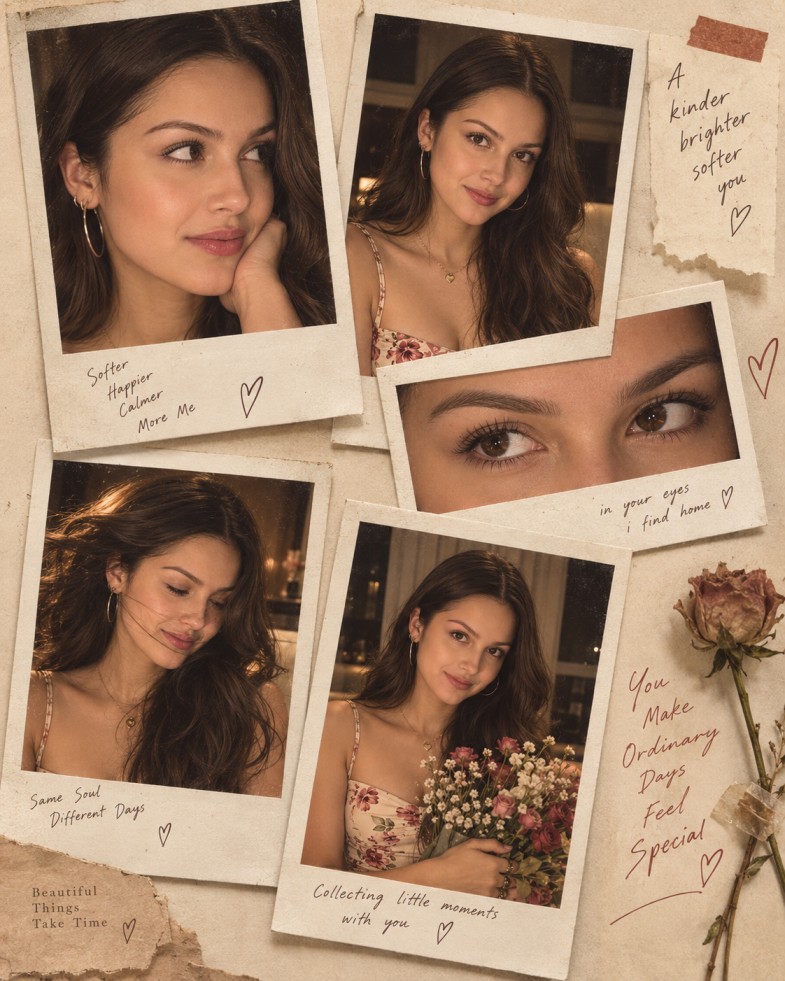
4. Polaroid Wall Romance Poster
This gives you a completely different physical collage instead of one blended portrait.
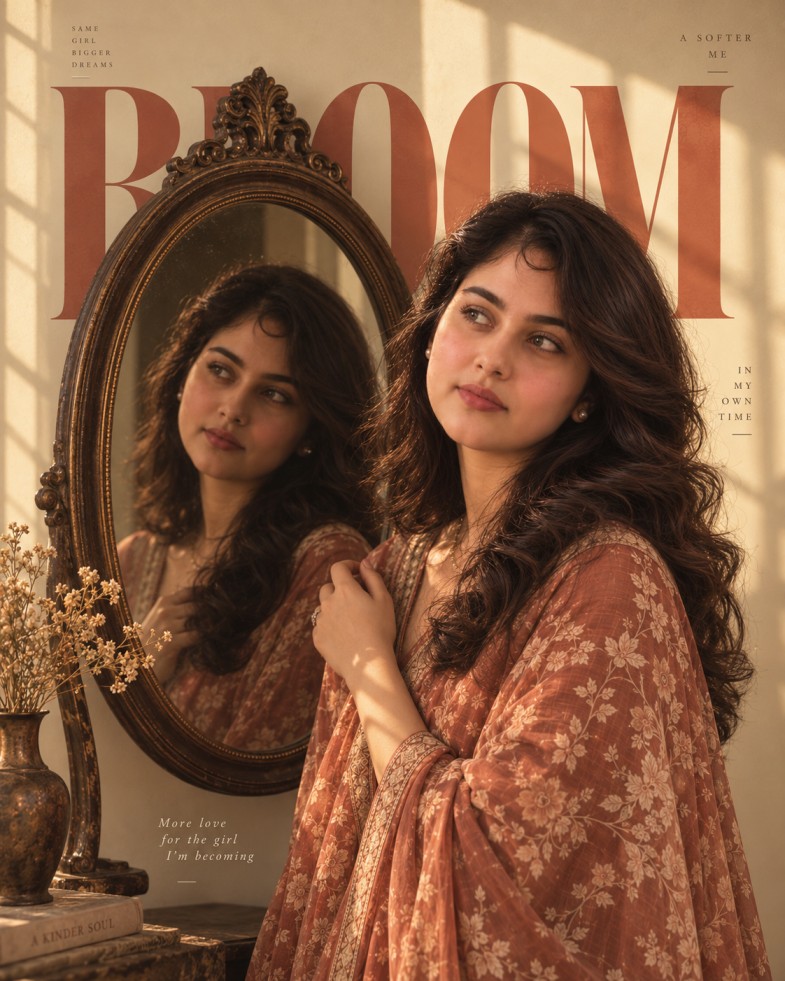
5. Mirror + Reflection Romance Poster
This introduces reflection as the main visual device.
6. Paper-Cut + Real Photograph Editorial Poster
This is where the article becomes much more distinctive. Instead of making everything photographic, only the portrait remains photographic while the surrounding design becomes layered paper art.
7. Romantic Cinema Poster – One Portrait, Multiple Visual Layers
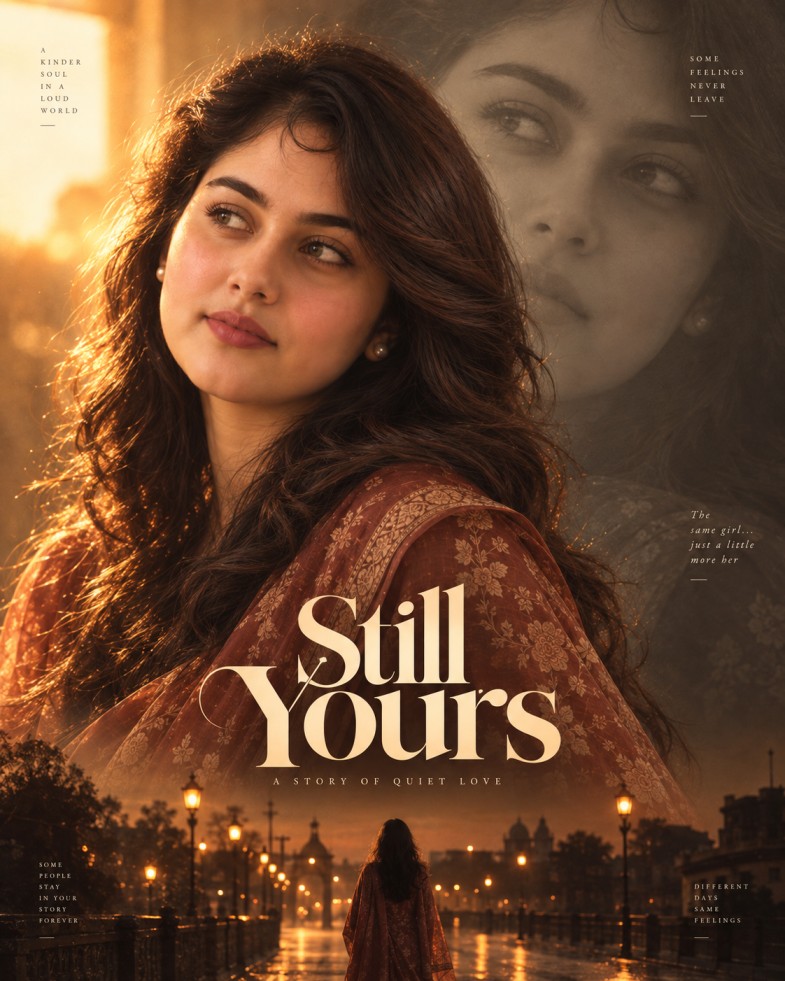
This one moves away from the Instagram scrapbook look and toward an Indian romantic film-poster composition.
How to Make These Romantic Poster Prompts Work Better
Use one identity reference
For the most consistent result, upload a clear, high-resolution portrait and tell the model that it is the only source of facial identity.
This is particularly important when the prompt contains many decorative elements. Without a strong identity instruction, the model may prioritize the poster design over the person’s face.
Don’t let the decorations overpower the portrait
Flowers and butterflies should support the composition rather than cover the face.
Use phrases such as:
“Decorative elements must remain secondary to the subject.”
This helps keep the portrait as the visual focal point.
Keep typography behind the subject
The large headline is one of the defining characteristics of this poster style.
Tell the generator:
“Place oversized typography behind the subject, with the person’s body naturally overlapping portions of the letters.”
This creates much more depth than putting text beside the person.
Use a controlled color palette
The strongest combinations for this aesthetic are:
- Butter yellow
- Warm cream
- Peach
- Blush pink
- Terracotta
- Warm brown
- Soft orange
- Beige
Avoid adding neon blue, purple, or highly saturated colors unless you intentionally want a completely different aesthetic.
Recommended AI Generation Settings
| Setting | Recommendation |
|---|---|
| Aspect Ratio | 4:5 |
| Image Style | Photorealistic |
| Reference Strength | 80–95% |
| Identity Strength | High / Maximum |
| Stylization | Low–Medium |
| Lens | 70–85mm |
| Lighting | Warm diffused |
| Color Grade | Warm pastel |
| Skin Retouching | Soft |
| Face Restoration | Off / Very Low |
| Background | Cream / Pale Yellow |
| Composition | Editorial Poster |
| Detail | High |
Negative Prompt
Use this negative prompt with the variations when your generator supports a separate negative-prompt field:
wrong person, identity loss, identity drift, generic model face, altered facial structure, changed face shape, changed forehead, incorrect hairline, different eyebrows, different eyes, changed eye color, altered nose, altered lips, altered jawline, changed skin tone, excessive beautification, plastic skin, waxy skin, airbrushed skin, excessive makeup, heavy lipstick, false eyelashes, incorrect hairstyle, artificial hair, wig-like hair, extra jewelry, missing pearl necklace, sunglasses, crown, hat, incorrect saree, western clothing, modern suit, incorrect floral pattern, excessive decorations, too many butterflies, giant butterflies covering face, flowers covering face, cluttered composition, oversized foreground objects, unreadable typography, misspelled text, incorrect title, incorrect quote, random text, extra text, missing typography, typography covering face, dark background, blue lighting, neon colors, cold lighting, harsh flash, dramatic studio lighting, excessive contrast, distorted anatomy, extra arms, extra hands, extra fingers, fused fingers, malformed fingers, broken wrists, unnatural pose, distorted hair, blurry eyes, blurry face, low resolution, pixelation, CGI, cartoon, anime, illustration, painting, artificial skin, oversharpening, watermark, logo, signature, border, frame, duplicate subject, duplicated flowers, unrealistic butterflies, unnatural lighting.FAQ
What is a romantic poster portrait AI prompt?
A romantic poster portrait AI prompt combines a portrait with editorial design elements such as large typography, flowers, butterflies, decorative graphics, warm colors, and cinematic lighting.
Can I use my own photo for these prompts?
Yes. Upload your portrait as the identity reference and instruct the AI to preserve your recognizable facial features while applying the described poster styling.
What aspect ratio should I use?
A 4:5 vertical ratio works particularly well for Instagram-style editorial posters and romantic social-media designs.
How can I keep my face consistent?
Use a clear identity reference, keep reference strength high, reduce stylization, and explicitly instruct the generator not to alter or reinterpret facial features.
Why does AI change the text in my poster?
Image generators can struggle with long typography and exact spelling. Keep important text short and check the generated poster afterward. For critical headlines or quotes, adding typography during final editing can provide more reliable results.
Final Thoughts
The key to this aesthetic isn’t simply adding flowers and butterflies to a portrait. The poster works because all of its elements share the same visual language: warm pastel colors, oversized typography, soft beauty lighting, traditional styling, botanical details, and a carefully controlled editorial composition.
For the closest results, use a strong portrait reference, keep the color palette restrained, and make the subject the dominant element while allowing the decorative collage to frame the portrait.