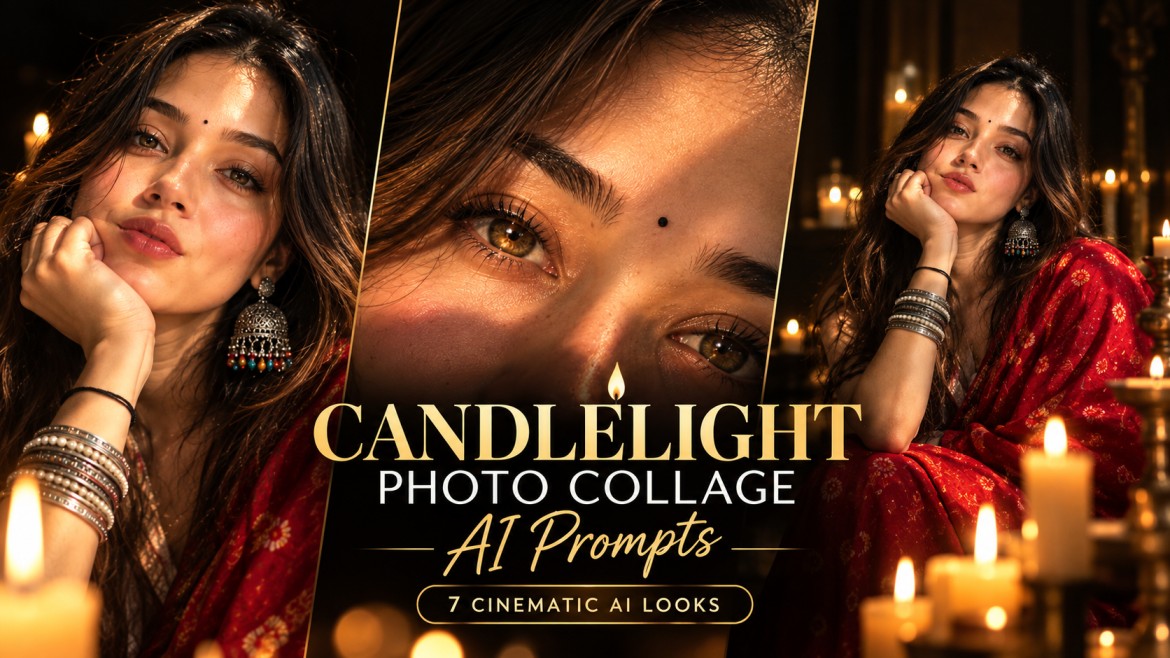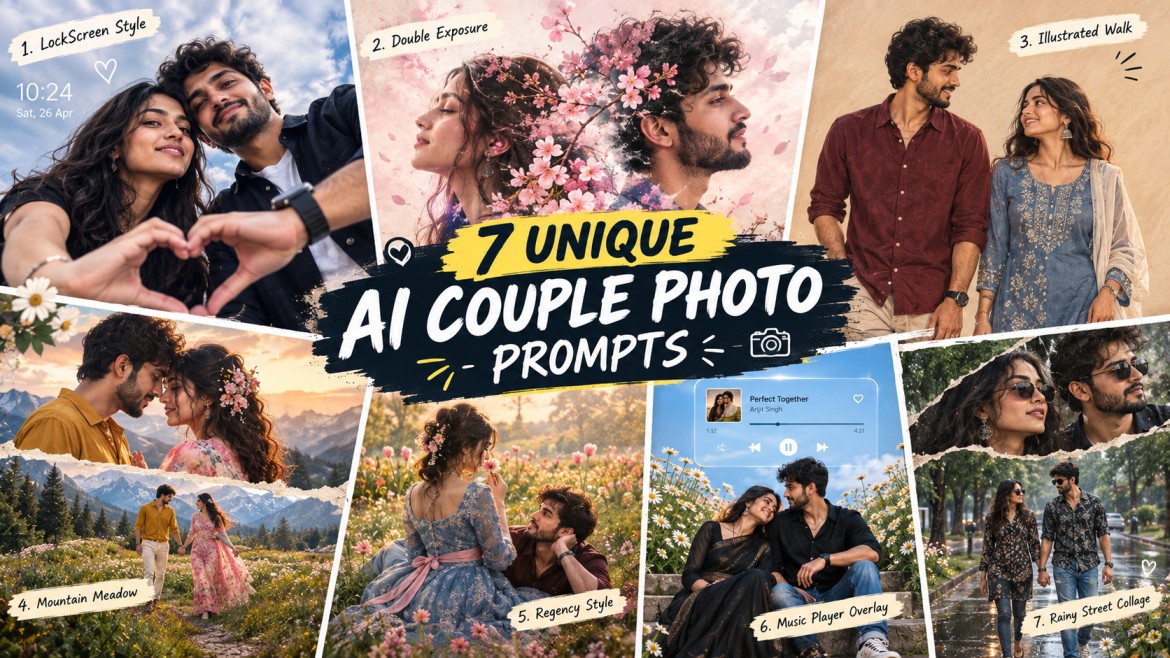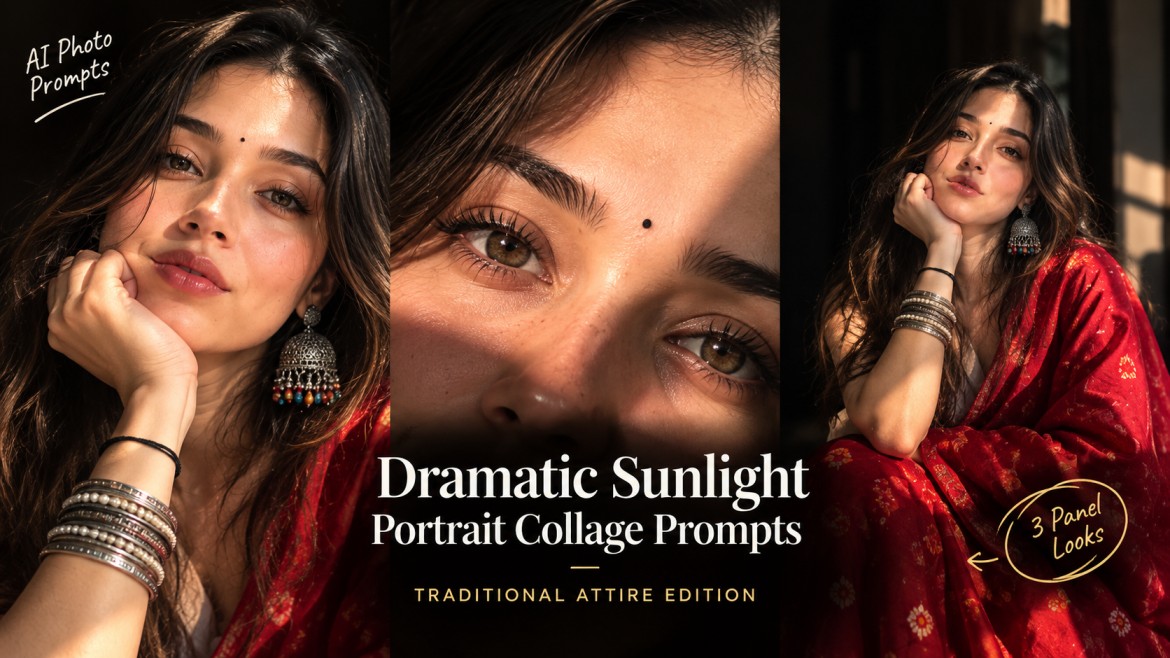
Some AI portraits stand out because of the lighting rather than complicated effects. A dark background, strong sunlight coming through a window, traditional clothing, realistic skin texture, and a three-panel composition can make the final image look like a carefully planned portrait session.
The key is consistency. The same identity, lighting direction, color treatment, and visual language need to carry through every panel. These five prompts keep that foundation while changing the outfit, atmosphere, and overall mood.
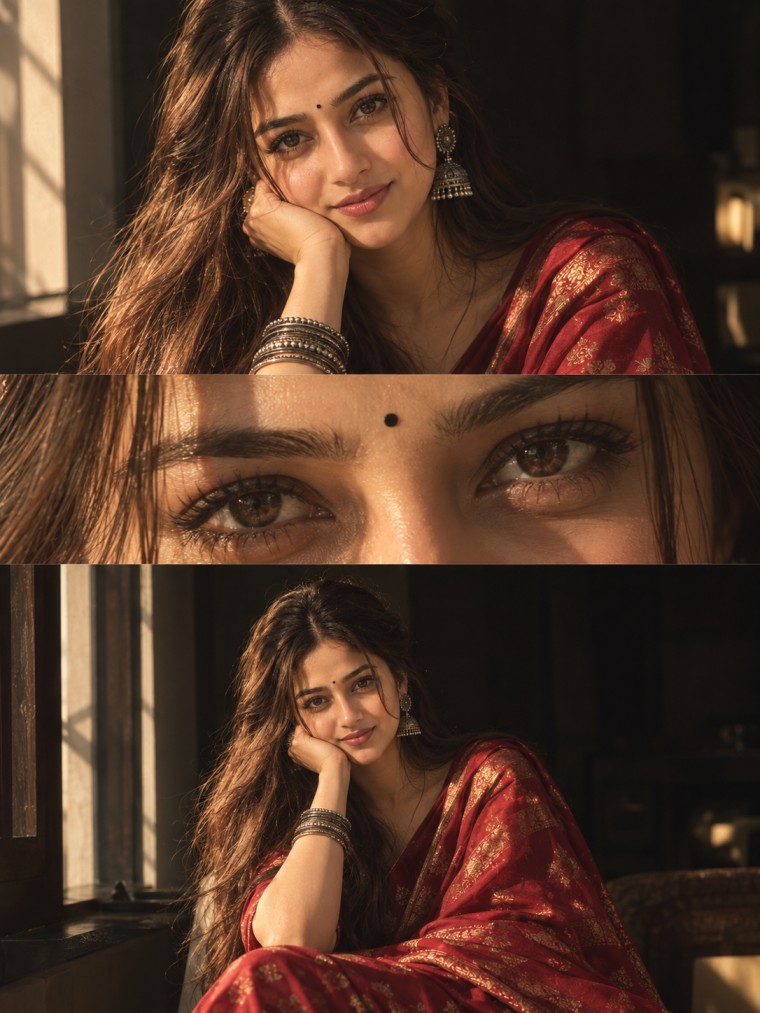
1. Classic Crimson Sari Window Light
This version uses the strongest contrast in the collection, pairing bright crimson traditional clothing with intense late-afternoon sunlight and a nearly black background.
Negative Prompt
changed face, generic model face, facial beautification, altered jawline,
changed eye color, six fingers, malformed hand, cartoon, CGI, flat
lighting, studio flash, text, watermark, borders, inconsistent panels.
The negative prompt is particularly useful for tools that support explicit negative prompting because it targets common problems such as altered facial structure, inconsistent panels, and artificial-looking lighting.
2. Festive Golden Lehenga Version
For a more celebratory result, this version replaces the crimson sari with a detailed gold-toned lehenga, flowers, and a maang tikka.
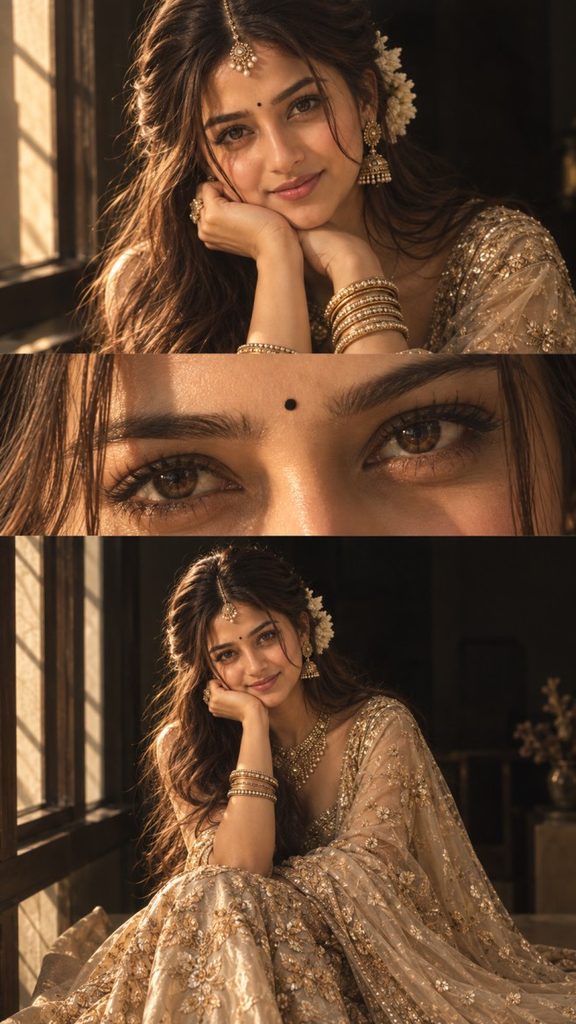
Tip: The flowers and maang tikka push this version toward a festive or wedding-adjacent aesthetic, making it different from the everyday portrait variations.
3. Soft Ivory Everyday Version
If the high-contrast crimson and gold versions feel too dramatic, this variation keeps the same three-panel structure but uses understated ivory clothing and gentler afternoon light.
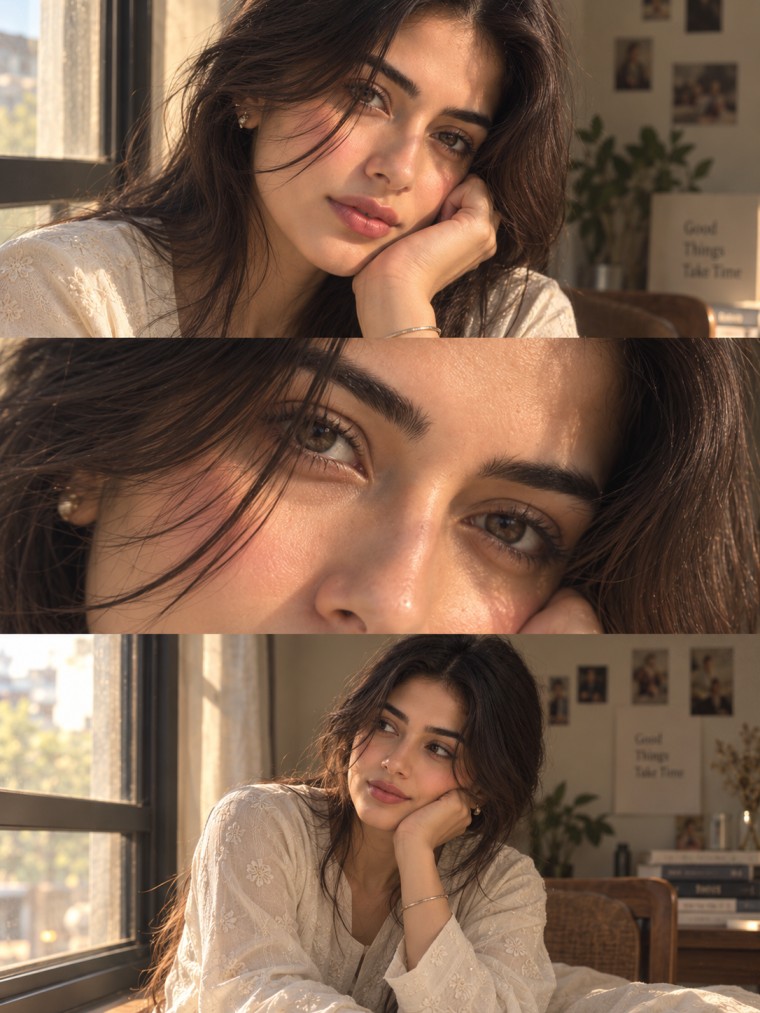
Tip: The simpler clothing and softer lighting make this a more adaptable option when you want the collage to feel natural rather than heavily styled.
4. Deep Blue Dusk Version
This variation changes the visual temperature completely. Instead of strong afternoon sunlight, it combines cooling outdoor dusk tones with warmer interior light.
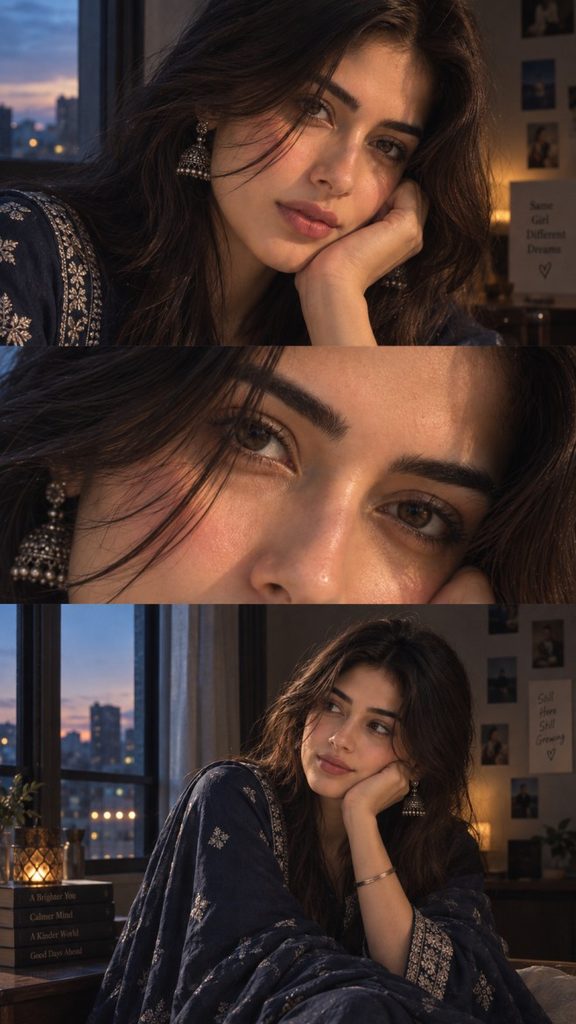
Tip: Mixed-temperature lighting can be harder for an image model to maintain consistently. If the panels don’t match, use one dominant light source instead.
How to Get a Better Three-Panel Result
The prompts work because several instructions reinforce each other:
- Keep the identity-lock instructions near the beginning.
- Repeat the same lighting direction across all three panels.
- Keep the 9:16 three-panel structure consistent.
- Use the eye panel as a tighter framing rather than changing the overall visual style.
- Keep the same color grading throughout the collage.
- If your generator supports negative prompts, use them for facial changes, malformed hands, borders, text, and inconsistent panels.
The repeated hand/face positioning in the wider panels also helps visually connect the individual frames into one portrait session.
Which Style Should You Try?
For a dramatic traditional portrait: Try the Classic Crimson Sari version.
For a festive or wedding-inspired look: Use the Golden Lehenga version.
For a simple everyday aesthetic: Choose the Soft Ivory version.
For a darker cinematic mood: Try Deep Blue Dusk.
For a men’s traditional portrait: Use the Men’s Sunlight Portrait version.
Frequently Asked Questions
Do I need a specific AI tool for these prompts?
These prompts are designed around strong image-reference and identity-preservation capabilities. Platforms that support negative prompts can also use the dedicated negative-prompt section, while tools without that feature can rely on the positive instructions in the main prompts.
Why does the eye panel sometimes change my eye color?
The lighting in the eye panel can cause the model to reinterpret the iris. That’s why the prompts explicitly mention preserving the exact iris color.
Can I change the traditional outfit?
Yes. The underlying structure can remain unchanged while you replace the sari, lehenga, kurta, jewelry, or color palette with your preferred style.
Can I use these prompts with a different aspect ratio?
The prompts are specifically structured for a vertical 9:16 three-panel collage. If you change the aspect ratio, adjust the composition instruction as well so the panels don’t become cramped.
Final Thoughts
The main trick behind this portrait style isn’t simply “dramatic sunlight.” The result comes from combining strict identity preservation, a clearly defined light source, consistent color grading, and a three-panel composition that feels like one coordinated photoshoot.
Start with the crimson version if you want the strongest visual contrast, or use the ivory version when you want something quieter and more natural. The same framework can then be adapted to different traditional outfits and moods without rebuilding the entire prompt structure.