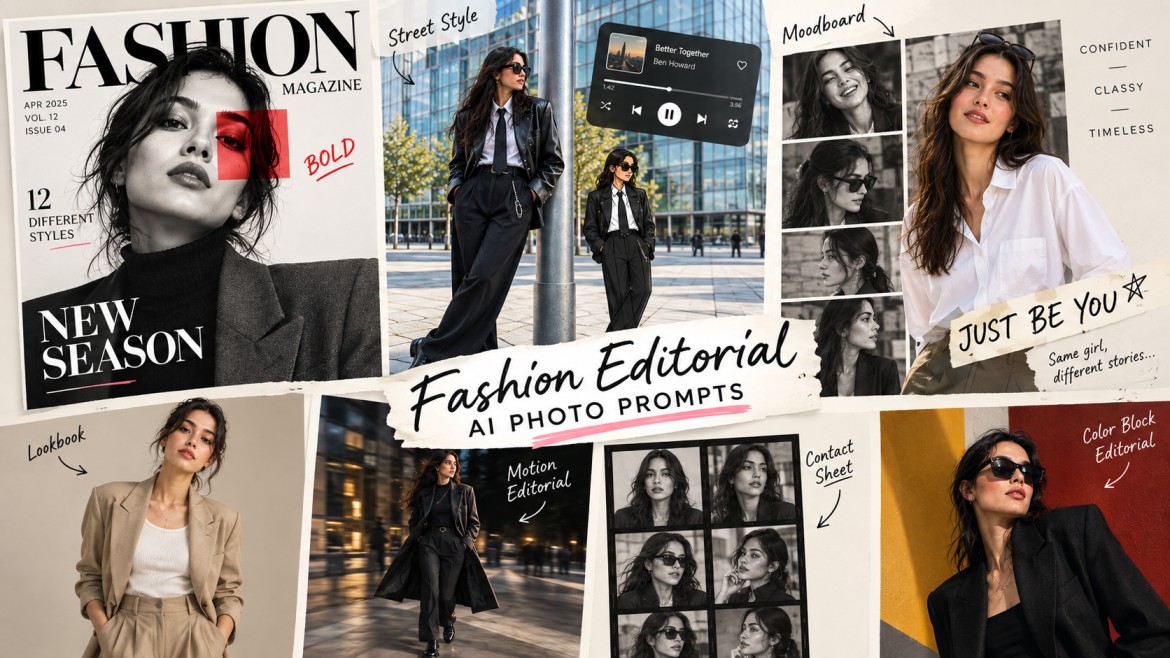
AI photo generation becomes much more useful when a prompt describes more than just clothing or background. Details such as identity preservation, lighting, camera style, composition, pose, color grading, accessories, and depth of field can help produce a much more intentional result.
In this collection, you’ll find five cinematic portrait prompts designed for different visual styles. They include warm floral collages, forest portraits, dreamy outdoor compositions, and traditional Indian fashion photography.
Each prompt can be adapted for your own uploaded photograph. Simply use your image as the reference and adjust the clothing, environment, colors, or typography according to the result you want.
Tip: When using an uploaded photograph, clearly state that the image should be used as the identity reference and that recognizable facial characteristics should remain consistent.
1. Warm Cinematic Female Collage
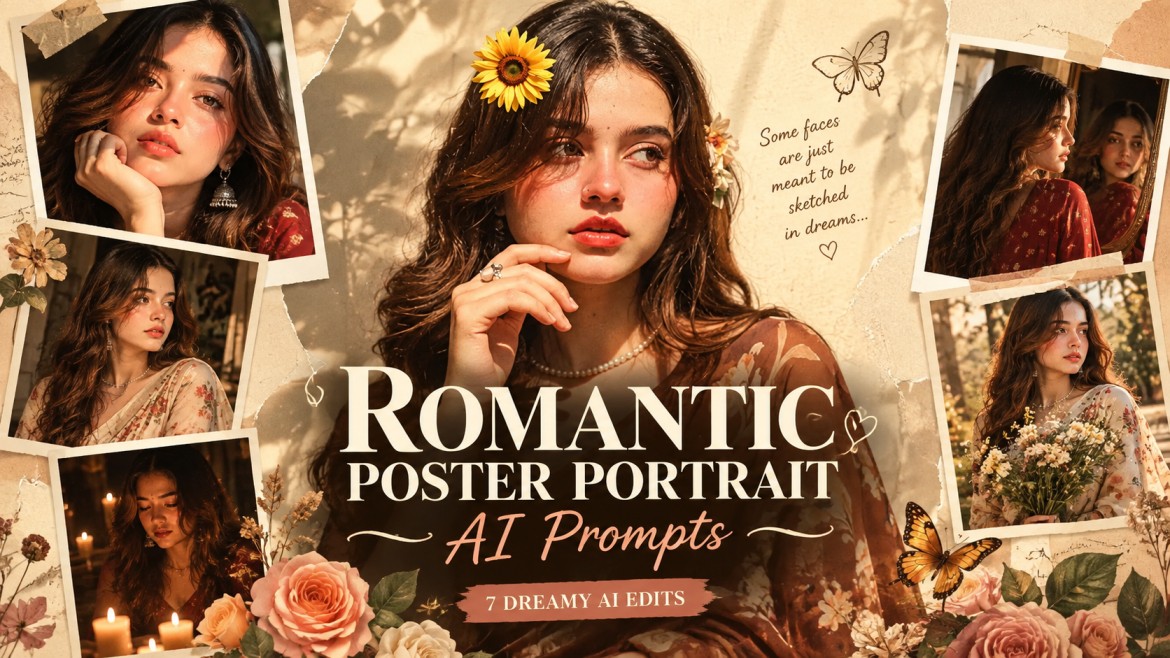
This prompt creates a warm, romantic portrait collage featuring multiple close-up compositions, traditional styling, flowers, and nostalgic cinematic color grading.

Prompt
Why This Prompt Works
The prompt combines several visual elements instead of relying on the word “cinematic” alone. The maroon outfit, golden lighting, flowers, film grain, and warm color grading create a cohesive visual identity.
The multiple portrait frames also make the result feel more like an editorial Instagram collage rather than a conventional single portrait.
2. Cinematic Portrait

Prompt
3. Athusee Forest Portrait Collage
This prompt is designed for a warm outdoor male portrait with three different frames, golden-hour lighting, natural greenery, and a premium editorial appearance.

Prompt
Why This Prompt Works
The combination of forest scenery, golden-hour sunlight, cream linen clothing, and warm earthy grading creates a natural editorial aesthetic.
The three-frame structure also gives the AI clear instructions about how the final collage should be organized rather than leaving the composition entirely to chance.
4. Akena Pink Outdoor Collage
For a more colorful and romantic result, this prompt uses a vibrant pink traditional outfit, garden surroundings, soft sunlight, and pink-magenta grading.

Prompt
Why This Prompt Works
The strongest visual element here is the controlled pink-magenta color palette. The pink clothing, warm sunlight, greenery, and soft bokeh complement each other instead of competing for attention.
The 85mm portrait look also helps create flattering compression and a softer background, making the subject stand out from the garden.
5. Traditional Saree Three-Portrait Composition
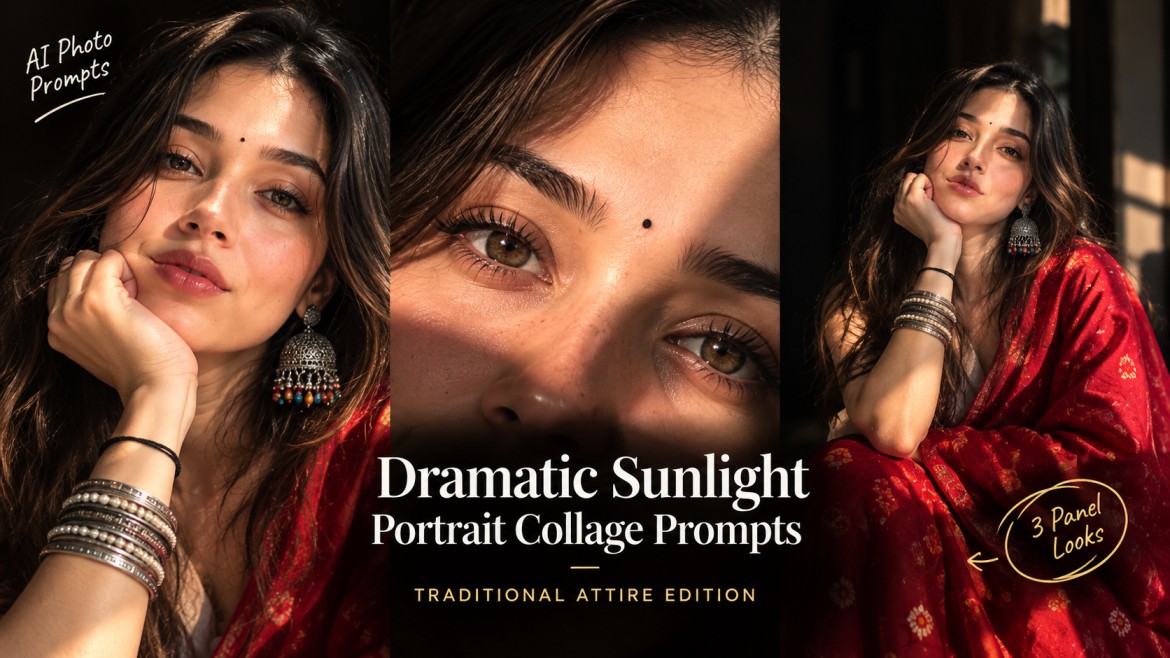
This prompt focuses on elegant Indian fashion photography, combining a deep plum saree, floral hair decoration, traditional jewelry, and warm architectural surroundings.

Prompt
Why This Prompt Works
This prompt is built around a consistent Indian fashion editorial aesthetic. The plum-purple saree, pink flowers, gold jewelry, traditional braid, and architectural background all reinforce the same visual theme.
Instead of simply asking for a “traditional portrait,” the prompt specifies individual styling elements that help the image model understand the desired appearance.
How to Get Better Results From These AI Portrait Prompts
The prompts above work best when the reference photograph is clear and the subject is visible.
1. Use a Clear Reference Photo
Choose an image where the face is reasonably sharp and unobstructed. Extremely dark, blurry, or heavily filtered photographs can make identity preservation more difficult.
2. Keep the Identity Instruction
If likeness is important, keep the identity-preservation portion of the prompt. You can also specify individual characteristics such as:
- Facial structure
- Hairstyle
- Skin tone
- Glasses
- Jewelry
- Body proportions
- Natural expression
3. Don’t Overload the Prompt With Conflicting Styles
Try to maintain one primary visual direction. For example, the warm forest aesthetic works because the lighting, clothing, environment, and color grading support the same mood.
4. Describe the Composition
For collage images, don’t only describe the subject. Tell the model how many frames you want and what each frame should show.
For example:
Three frames: close-up + side pose + full portrait.
This provides more compositional guidance than simply saying “make a three-photo collage.”
5. Use Lighting to Control the Mood
Lighting can dramatically change the result.
Warm golden hour: romantic and nostalgic
Soft window light: intimate and natural
Hard directional light: dramatic and editorial
Overcast outdoor light: soft and realistic
Warm architectural lighting: elegant and luxurious
Final Thoughts
These five prompts demonstrate how a single uploaded photograph can be transformed into very different AI portrait styles.
From the warm floral female collage and golden-hour forest portrait to the pink outdoor composition and traditional saree editorial, each prompt uses a combination of identity preservation, styling, composition, lighting, and color grading to create a specific visual direction.
The biggest improvement usually comes from being specific about what should remain consistent and what should change. Instead of simply asking an AI image generator to “make a cinematic photo,” describe the camera style, lighting, environment, clothing, pose, color palette, and composition you actually want.
That gives the model a much clearer visual target and makes the resulting image easier to reproduce and customize.